
Pediatric Cancer Landscape 2026: A New Joint Report
A decade of scientific progress has brought new possibilities for children with cancer. But too many families continue to face diagnoses with few effective treatment options, and the majority of survivors live with lasting effects of the therapies that saved their lives.
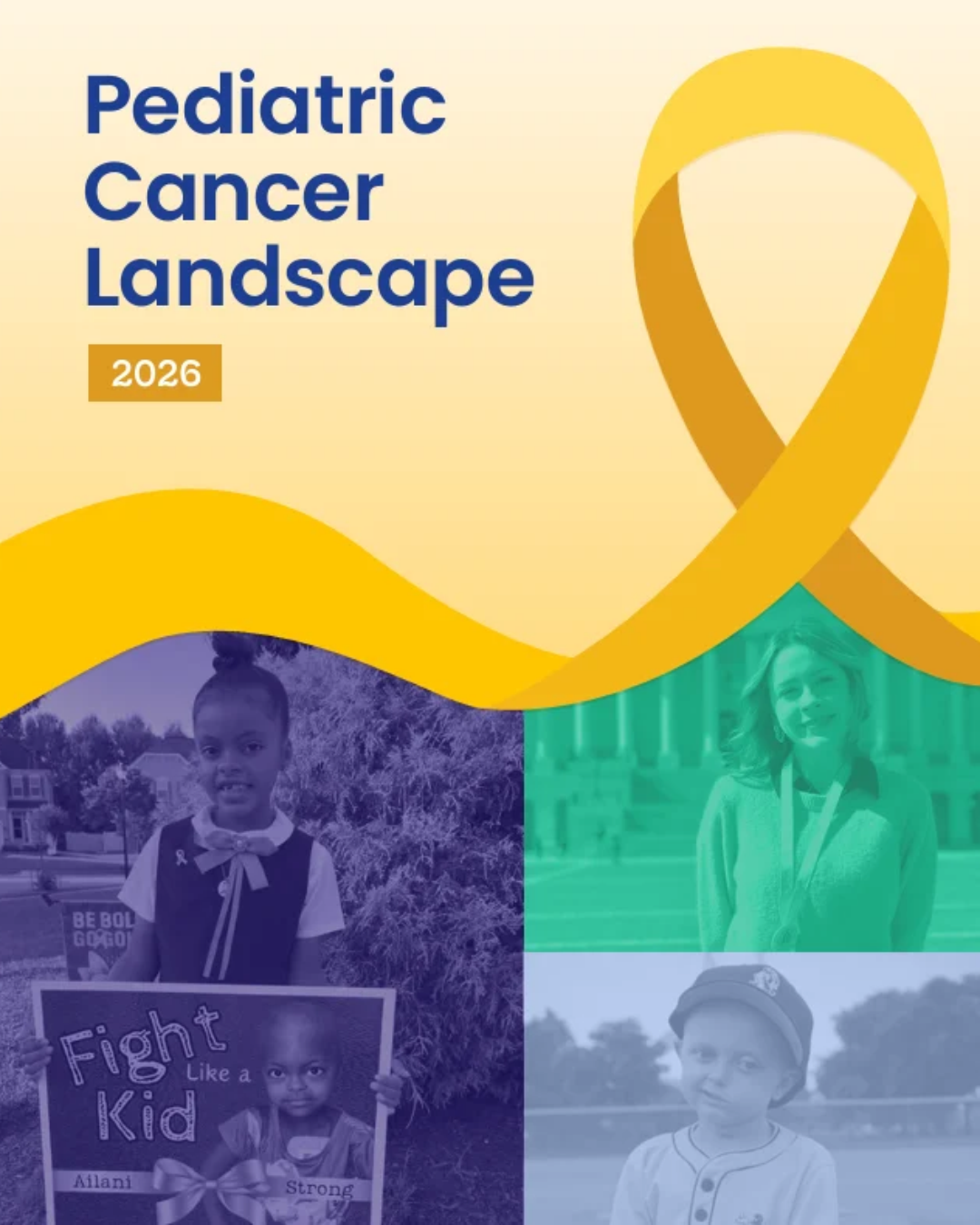
The newly released Pediatric Cancer Landscape 2026, a joint report from the American Cancer Society Cancer Action Network (ACS CAN) and the Alliance for Childhood Cancer, examines these challenges and opportunities. It updates a landmark 2016 report that was the first of its kind and is accompanied by consensus policy recommendations adopted by the Alliance.
Children’s Cancer Cause is proud to contribute to this effort as an Alliance member. Our founder, Susan L. Weiner, PhD, served on the report’s steering committee, joining experts from research, medicine, government, industry, and advocacy. This collaboration, updated a decade later from the 2016 Landscape Report, reflects the importance of bringing the childhood cancer community together to identify barriers and advance solutions.
Progress — and the gaps that remain
The report explains why children need research that addresses their distinct cancers and developing bodies. Between 2016 and 2025, 122 new cancer therapies were approved, but only four were initially developed specifically for children. Drugs developed for adults can offer important pediatric treatment options, but dedicated childhood cancer research remains essential.
The report also examines opportunities in data sharing, clinical research, and drug development, alongside persistent challenges such as shortages of essential medicines. Its findings reinforce the need to pursue treatments that improve survival while reducing harm during treatment and throughout survivors’ lives.
Turning findings into policy action

Two of the report’s Steering Committee members: Children’s Cancer Cause Founder Susan Weiner, PhD, and board member Michael Link, MD
“Understanding the unique aspects of pediatric cancer and the associated research challenges can help guide efforts to overcome barriers and develop better treatments for children,” said Michael Link, M.D., Lydia J. Lee Professor of Pediatrics at Stanford University School of Medicine, co-chair of the Alliance for Childhood Cancer, and Children’s Cancer Cause board member. “This report makes clear that the collective engagement of children, families, researchers, industry and government are critical to make significant progress possible, save lives and improve quality of life into survivorship.”
The accompanying policy recommendations offer a shared advocacy agenda across four areas:
Sustain research investment. Support durable federal and state funding, including the Childhood Cancer STAR Act, Childhood Cancer Data Initiative, and Gabriella Miller Kids First program. Strengthen trial networks and participation in community and rural settings.
Learn from every patient. Invest in connected research data systems that represent diverse populations, protect privacy, and respect families’ control over their data.
Improve clinical research and regulatory approaches. Reduce barriers that delay trials and participation, use innovative study designs, and support international collaboration.
Strengthen drug development and supply. Maintain incentives and public-private partnerships that help bring pediatric therapies to patients, while addressing chronic shortages of essential generic medicines.
The recommendations also recognize healthy survivorship as a research priority and call for meaningful representation of patients and families in decisions. Their focus is research and drug development; broader access-to-care and survivorship policy needs require continued attention.
Impact on our work as we look ahead to a new Congress
These priorities connect directly to our work advocating for safer, more effective therapies and an improved quality of life for childhood cancer survivors. A sustained research investment and careful attention to long-term health all matter to the future we are working toward.
Through the Alliance, we join with partner organizations to bring a shared message to policymakers. Susan’s steering committee service represents another way Children’s Cancer Cause contributes to that collective effort.
We congratulate ACS CAN, our fellow Alliance members, and the steering committee, authors, reviewers, and contributors on this important publication. We look forward to using its findings and recommendations to inform our advocacy - and to helping families and supporters turn awareness into action.