
Findings from 2026 Survivor Survey
Childhood Cancer Survivors Call for Lifelong Care, Research Investment in 2026 National Survey
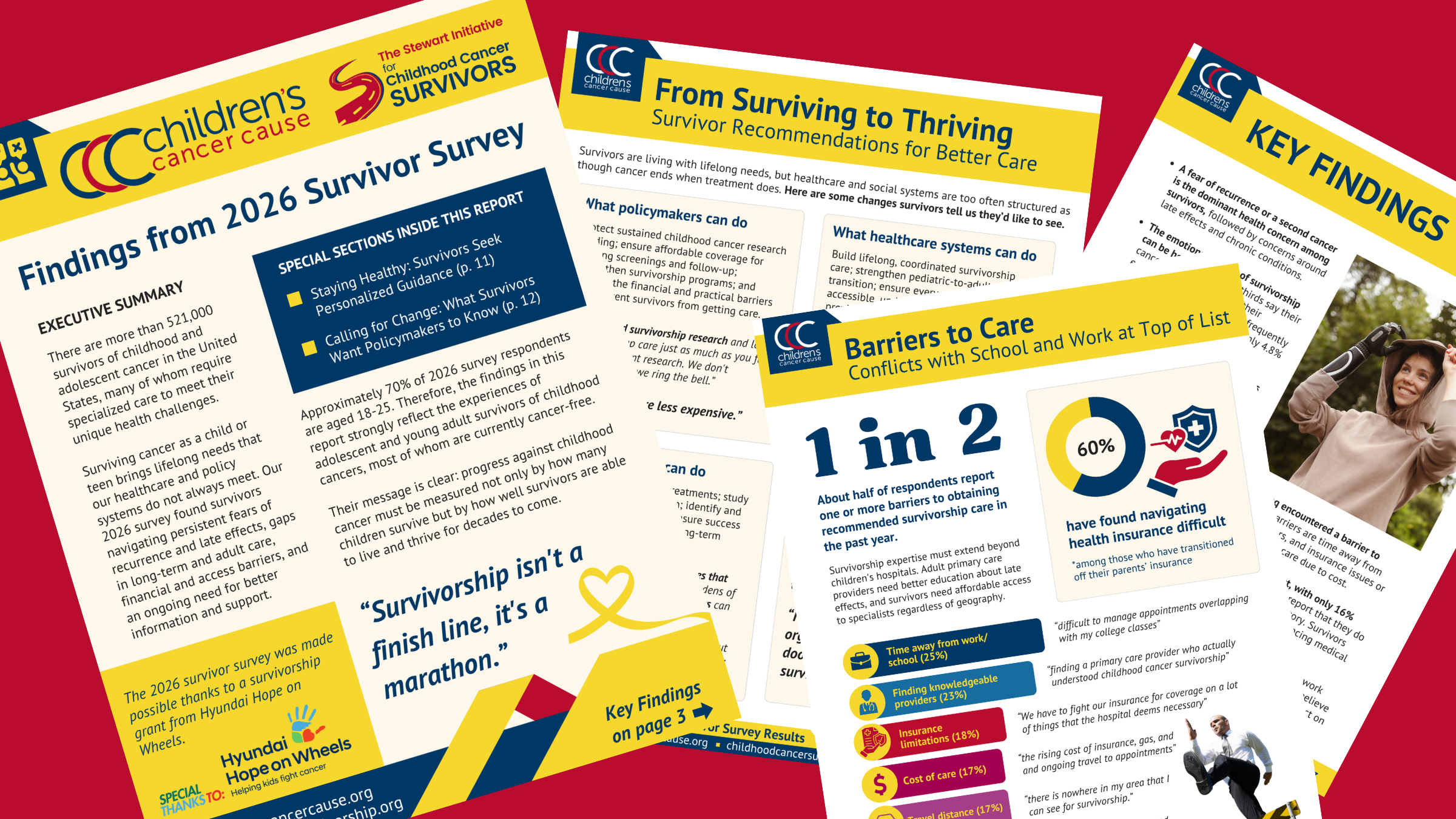
Childhood cancer survivors continue to navigate fears of recurrence, long-term health effects, emotional challenges, financial burdens and gaps in healthcare years - and sometimes decades - after treatment. These findings come from a June-August 2026 survey of childhood cancer survivors released in September by Children’s Cancer Cause.
Key survey findings reveal significant and under-addressed challenges facing young adult survivors of childhood and adolescent cancer:
Nearly half of survivors named recurrence, relapse or a second cancer as a top health concern. Late effects and chronic health conditions were another major theme, with survivors raising concerns ranging from cardiac problems and fertility to mobility and cognitive effects.
The emotional impact of childhood cancer persists long after treatment. More than two-thirds (68%) said their cancer experience affects their emotional well-being frequently or occasionally.
Survivorship care remains fragmented. Many survivors report that they do not have a Survivorship Care Plan, and over half report encountering a barrier to survivorship care within the past year. Survivors described difficulty finding adult healthcare providers who understand the long-term effects of childhood cancer treatment.
Financial consequences extend well beyond treatment. More than half (52%) said childhood cancer has had a major or moderate financial impact on them or their family. Survivors reported ongoing healthcare expenses, lost work opportunities, medical debt, higher insurance costs, and other financial burdens.
Survivors want greater attention from policymakers. Just 6% of surveyed survivors express satisfaction with today’s federal government in addressing the needs of young adult survivors of childhood cancer.
Survivors call for action as federal research funding faces uncertainty
The report comes during Childhood Cancer Awareness Month and at a consequential time for federal cancer research. Survivors responding to the survey repeatedly urged policymakers to protect research funding, develop less-toxic treatments, and devote greater attention to the lifelong consequences of childhood cancer treatment.
“Please fund survivorship research and long-term follow-up care just as much as you fund initial treatment research,” one survivor wrote. “We don't disappear after we ring the bell - we live with the consequences of treatment for decades.”
Survivors also called for better transitions from pediatric to adult healthcare, affordable insurance coverage for lifelong screenings and follow-up, greater mental health support, and policies addressing the educational, employment and financial consequences of childhood cancer.

“As we mark Childhood Cancer Awareness Month, we must recognize that curing cancer is only part of the fight,” said John Guastaferro, Executive Director of Hyundai Hope On Wheels, a 501(c)(3) non-profit organization which helped support the survey. “Every survivor’s journey continues beyond treatment. We are dedicated to helping the 521,000 survivors of childhood cancer move forward with strength, support, and hope.”
The 2026 Survivor Survey is an activity of the Stewart Initiative for Childhood Cancer Survivors, a Children’s Cancer Cause program supporting survivors as they navigate life after treatment. The initiative includes college scholarships and free bilingual online survivorship education addressing long-term follow-up care, physical and emotional late effects, self-advocacy, and the transition to adulthood.
Thank you to every survivor who participated in this year's survey. Your input enables us to better represent the unique needs and perspectives of childhood and adolescent cancer survivors in our program and policy work.
