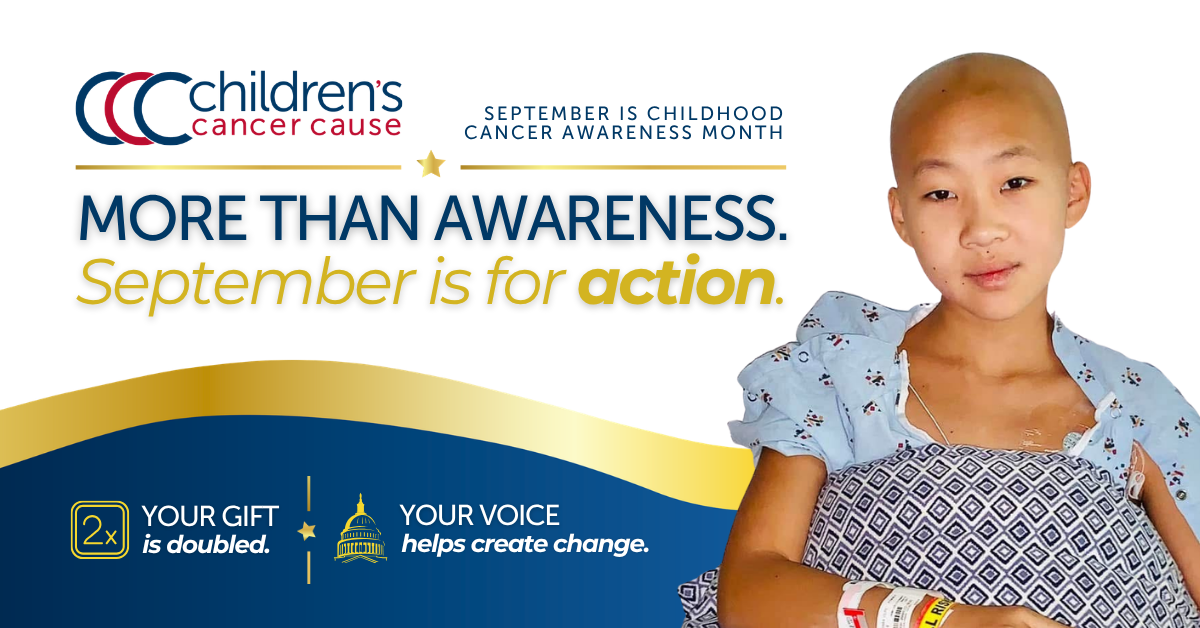
Every September, Childhood Cancer Awareness Month shines a light on children with cancer and the challenges they face. This September, we’re asking you to join us in more than awareness:
Listen to survivors. Know the issues. Help change the story by taking action.
Your donation this month is also more: Every dollar donated in September will be doubled.
Childhood cancer doesn’t always end when treatment does. Survivors face lifelong health challenges, gaps in care, emotional and financial burdens, and treatments that save lives while leaving lasting effects.
Throughout September, we’ll share new research, community events, and ways that you can help create a brighter future for children with cancer, survivors, and their families.
And we’ll share the voices of survivors like Emily:
Emily survived childhood cancer. Now she’s using her experience to help shape what comes next.
Emily was diagnosed with an extremely rare and aggressive sarcoma the summer before she started high school.
Her treatment saved her life, but it also nearly took it.
After surgery, Emily underwent chemotherapy so aggressive she experienced heart failure, a stroke, and sudden cardiac arrest. She was placed on life support, spent 27 days in a coma, and then faced months of hospitalization and rehab as she relearned basic functions.
Today, Emily is one of more than 521,000 childhood cancer survivors in the U.S. She’s studying English at college with hopes of becoming a teacher, while she continues to receive regular medical follow-up and recovery care.
And she’s using her voice to make a difference. Emily has partnered with her high school biology teacher and oncologist to teach students about the science of cancer, the patient experience, and the importance of research and advocacy.
As a 2026 Children’s Cancer Cause College Scholar, she plans to bring that presentation to even more schools.
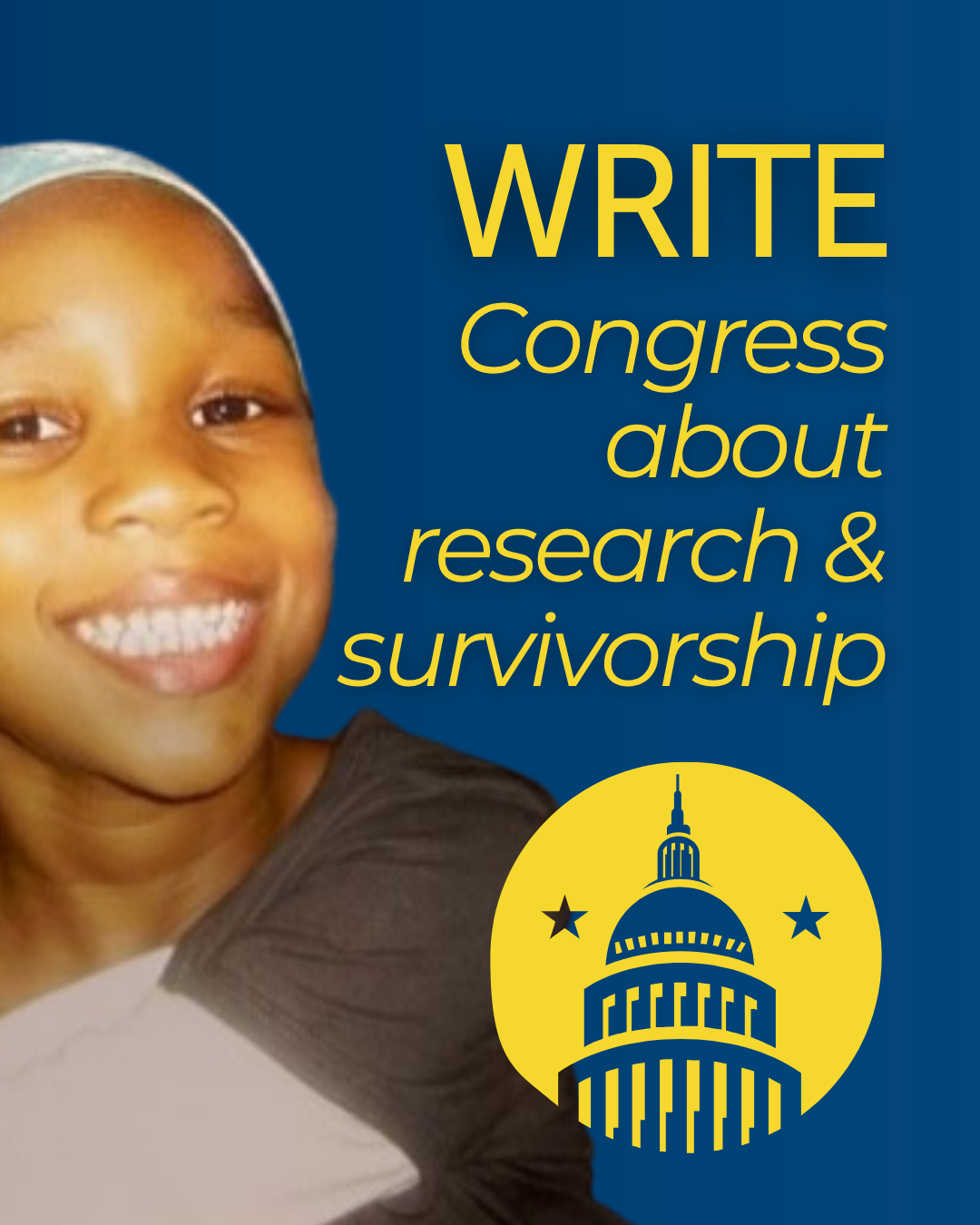
“Sharing my experience allows me to turn a difficult chapter of my life into something meaningful by helping others better understand the realities of cancer and the challenges survivors often face.”
That’s what More than Awareness means: listening to survivors like Emily to fully understand the lifelong impact of childhood cancer. It means supporting research for safer, more effective treatments. And it means speaking up for policies and care that help survivors live long, healthy lives.
This September, know the issues. Hear their voices. Help change what comes next.
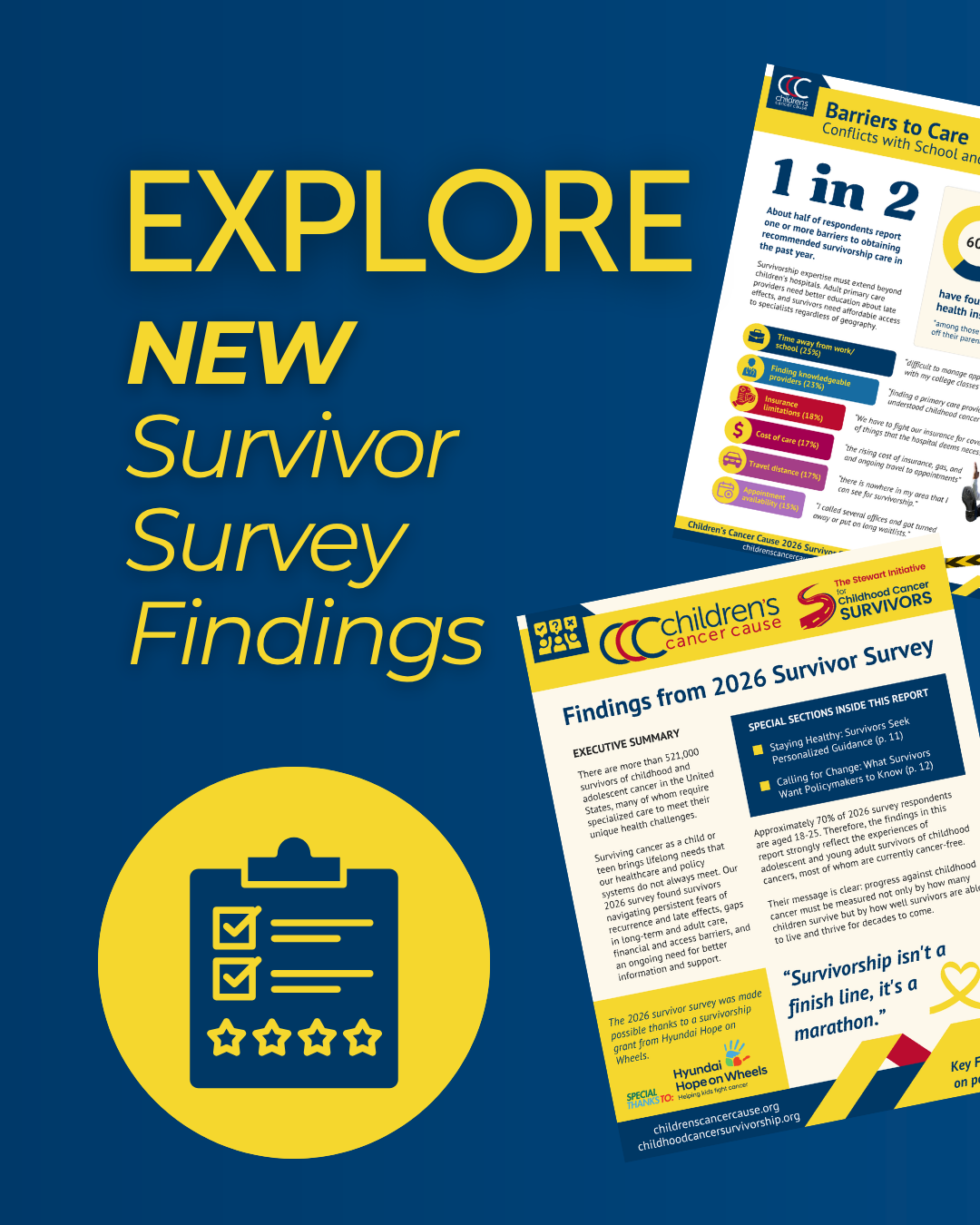
SHOW YOUR SUPPORT BY SHARING ONE OF THESE GRAPHICS
All of the following social graphics have been created by Children’s Cancer Cause for anyone to use. Right click any graphic to save it to your device (or hold down on the image on a smartphone) for easy sharing on your social platforms. If you tag us in your post (@childrenscause), we’ll re-share out to our own network of followers with our thanks for your support. You are welcome to add your organization, team, or group’s logo or name to any of these graphics. Below the graphics are sample messages you can share as captions to your post, adapted as you see fit.
If you’re looking for custom content that matches your team or organization’s colors, mascot, or brand, please reach out using the form on this page and we’ll see what we can come up with for you. We love to find new creative ways to spread awareness about childhood cancer!
Find more social-sharing graphics here, including alternate size options: our toolkit for organizations or for individuals.
KNOW THE FACTS ABOUT CHILDHOOD CANCER
In 2026, an estimated 9,680 children (ages 0 to 14 years) and 5,660 adolescents (ages 15-19 years) will be diagnosed with cancer.
Childhood cancer is not one disease – there are more than 13 major types of pediatric cancers and over 200 subtypes.
Cancer is the number one cause of death by disease among children. Worldwide, 100,000 children lose their lives every year to cancer.
Despite numerous clinical trials, a diagnosis of diffuse intrinsic pontine glioma (DIPG) is typically terminal, with only 10% of DIPG patients surviving for even two years after diagnosis.
More than 95% of childhood cancer survivors will have a significant health related issue by the time they are 45 years of age; these health related issues are side-effects of either the cancer or more commonly, the result of its treatment.
Source: Coalition Against Childhood Cancer (CAC2)