
Hope Over Despair: Childhood Cancer and the Lifelong Journey of Survivorship
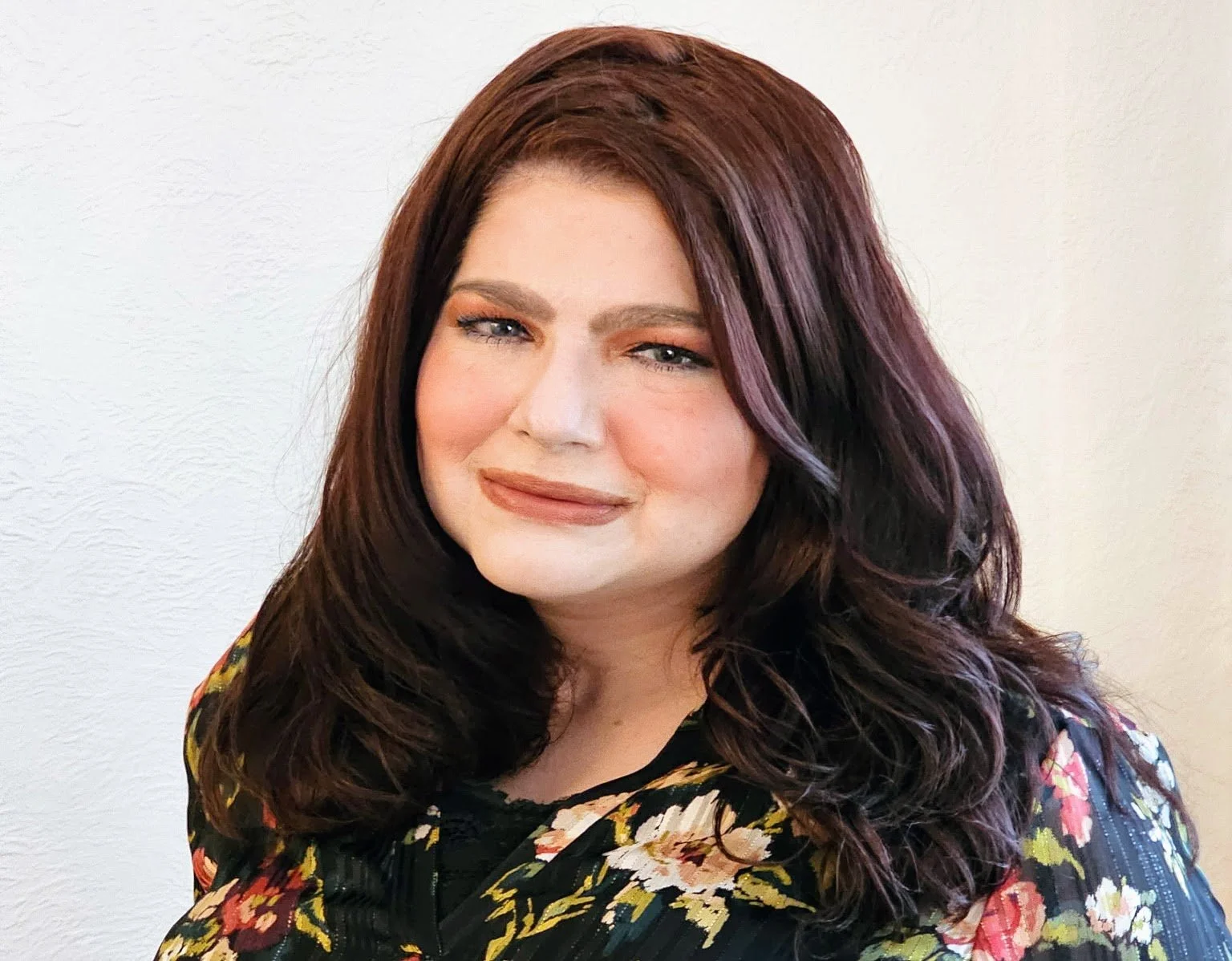
About the author: Mariah Forster Olson is a childhood cancer survivor, advocate, and author of the book Hope Over Despair. She sits on the board of many nonprofit organizations and is a member of Children’s Cancer Cause’s Survivorship Advisory Council.
As a baby, Mariah was diagnosed with neuroblastoma and underwent extensive chemotherapy, radiation therapy, and surgical procedures to save her life. This resulted in a cure for her cancer but left her with a lifetime of debilitating long-term and late effects. Her passion for public speaking and advocacy is making a positive impact in the childhood cancer community.
All views expressed are the author’s own.
“I hope this book raises awareness about the lifelong impact of childhood survivorship. It’s a common misconception that life simply returns to ‘normal’ after treatment ends.”
I have learned that life’s hardest moments can bring the greatest wisdom and teach valuable lessons. We all face pain and challenges, but what truly matters is how we respond. It is important to have hope to overcome life’s difficulties and to see the silver lining of any situation, such as a smile or a kind word. Even in times of darkness, hope can help us overcome the despair that we experience in life, especially when it comes to childhood cancer. You cannot always change what happens to you, but you can change how you think and respond.
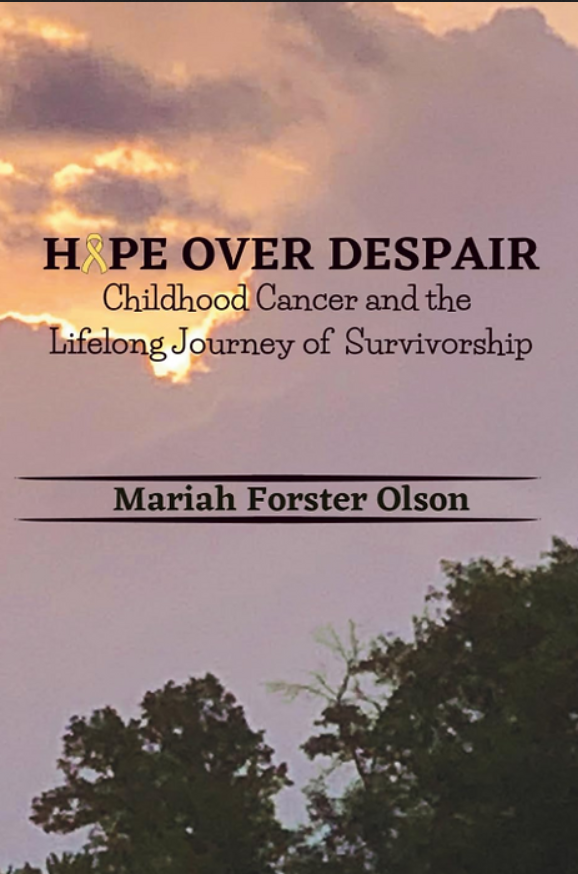
Cover of Mariah’s recently published memoir
This is the message behind my newly published memoir, Hope Over Despair: Childhood Cancer and the Lifelong Journey of Survivorship, which details my cancer story, my late effects and medical issues, and the perspectives and lessons that I have learned from my experiences. (A portion of the royalties from each book sale is donated to the Neuroblastoma Children’s Cancer Society.)
I was just a baby when doctors at our local hospital saw my x-rays and told my parents there was a “shadow” on the right side of my chest. They were told to immediately take me to Mayo Clinic in Rochester, Minnesota. They were very confused and scared. The next day, June 6, 1980, became “D” Day in my family because I was officially diagnosed with neuroblastoma, a type of childhood cancer consisting of a solid tumor.
My tumor took up almost the entire right side of my chest, and it grew out of seven levels of my spine, wrapped around my heart, and pushed against my trachea and lungs, making it difficult to breathe.
My first surgery was attempted immediately, but the tumor was too large and intricately involved to remove. After several rounds of radiation treatments to shrink the tumor, doctors were able to remove most of it during a long, complicated second surgery. After that surgery, I had more radiation treatments, and I began two years of chemotherapy.
At the time that I was diagnosed, the severity, location, and advancement of the tumor made my cancer very difficult to treat successfully, and I faced grim odds of survival. However, a new, experimental chemotherapy protocol was presented to my parents, and the doctors estimated that it could raise my odds of survival. After much deliberation, my parents chose to sign the ominous paperwork that allowed me to try this experimental treatment.
On my third birthday, I finished my last chemotherapy treatment, and by the time I turned eight years old and had been finished with treatments for five years with no recurrence or relapse, I was pronounced cancer-free!
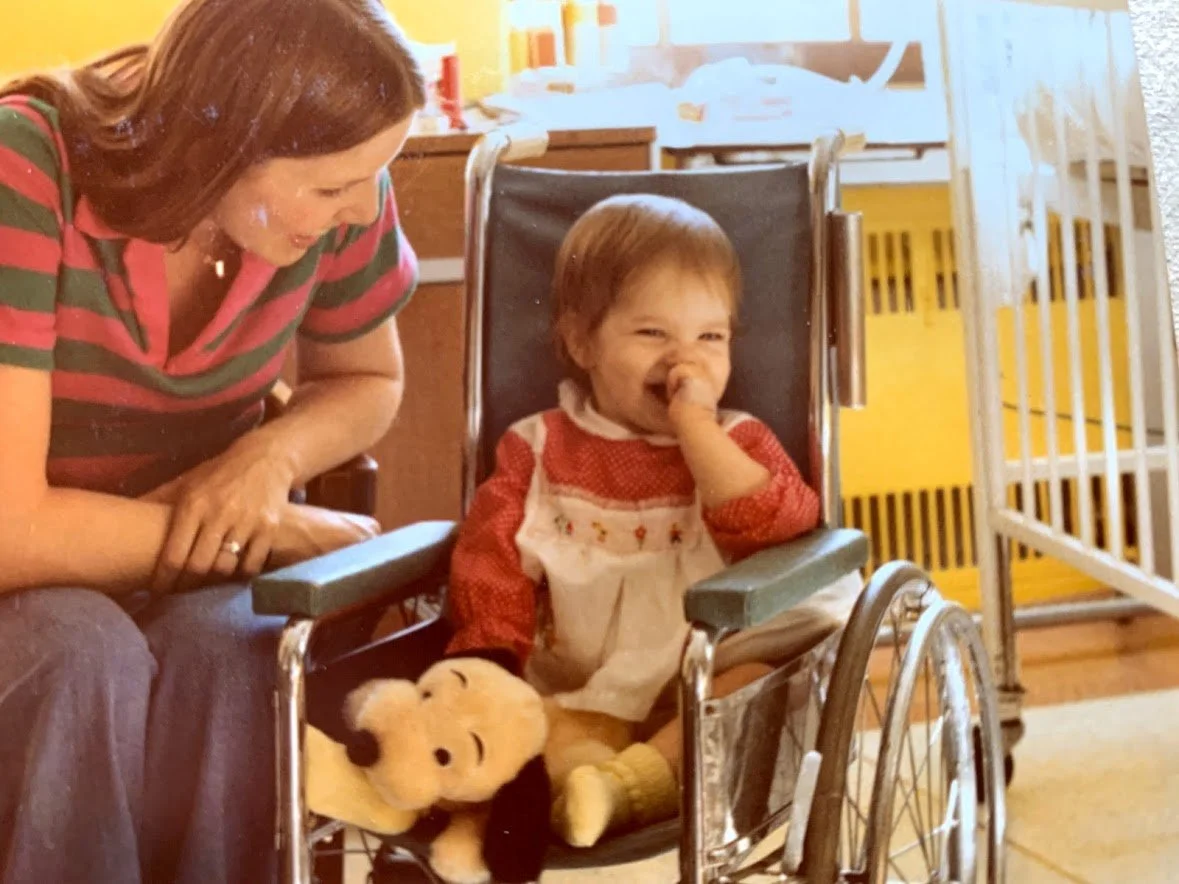
Mariah and her mom, June 1980
Against all odds, I fought neuroblastoma and survived, but survival came with lifelong challenges — over 100 long-term side effects and late effects, including: severe scoliosis, resulting in multiple spinal fusion surgeries; chronic, excruciating bone, muscle, and nerve pain in my back, neck and cancer scar; adrenal insufficiency disease; kidney disease; hypothyroidism; restrictive lung disease; asthma; and migraines, among others. I have had 52 surgeries, I walk with a cane, and I use a wheelchair for long distances.
You can choose to let negative situations get you down and let them negatively define your life. Or: you could use it and resolve to learn valuable lessons and focus on what you do have in life and what you can do to help others.
The key lesson that I have learned is to focus on hope, optimism, and positivity.
As a young child dealing with cancer and everything that follows, my parents liked to extol the virtue of Norman Vincent Peale’s book and belief in “The Power of Positive Thinking.” Peale, an American minister and author, believed that anyone can prevail over difficulties in life with faith, optimism, and hope. “Change your thoughts and you change your world,” said Peale.
Although you cannot change the difficulties that make up your life, you can strive to change how you think, respond, and deal with them. Even on the most difficult days and through anger and depression, there is something positive to be found, and changing your perspective can be incredibly powerful. Personally, I try to challenge myself to find that “silver lining” in any situation, whether it is during or after a particularly difficult time. Something as simple as a kind word or a smile, or learning how much you are loved and supported, can provide you with positivity, optimism, and hope.
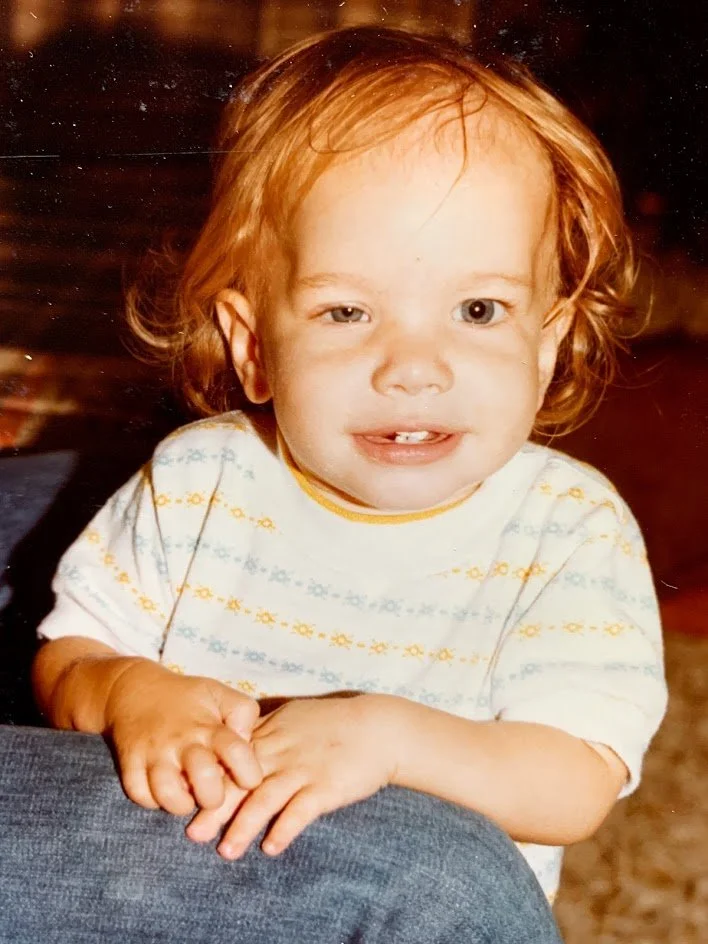
Mariah during treatment, starting to lose her hair
Faith is extremely important to me, and it is the main way that helps me foster and maintain hope, optimism, and positivity. In general, challenging experiences in life can either break us down or build us up. It can be quite difficult to deal with various medical issues daily, especially those that continue to worsen year-after-year. Yet, trials in our lives can impart valuable wisdom and lessons, and empower us to achieve great things. As a Christian, I have certainly learned this throughout my life. But, whatever faith you believe in, we can find strength to overcome life’s difficulties and moments of despair, and focus on hope.
A thirst for knowledge has always been an important part of my life. As you will read in my book, I made it a goal to become the valedictorian of my high school class when I was a child, inspired by my babysitter’s son's achievement. And I know that I was blessed to be able to attend college and get a Bachelor of Science in Political Science and a Master of Business Administration from the University of Wisconsin-La Crosse. But it’s more than just institutional education. Knowledge is about continually learning every day of your life through experiences, both personal and occupational. I continue to learn about the childhood cancer community, about nonprofit organizations, and about people on a daily basis.
A remarkable way to navigate through life’s problems is by embracing laughter. It has been a wonderful coping mechanism, and it also offers a way to infuse hope, optimism, and positivity into life. I genuinely love to laugh, even though it is often painful to do so. Laughter truly is the best medicine, and that adage holds true, as it brings both physical and emotional benefits to the body. Laughter can improve your mood and lessen stress, anxiety, and depression, making you feel happier and improving your self-esteem. Laughter unites people and can strengthen relationships. It can also shift your perspective and help you find the silver lining of a difficult situation.
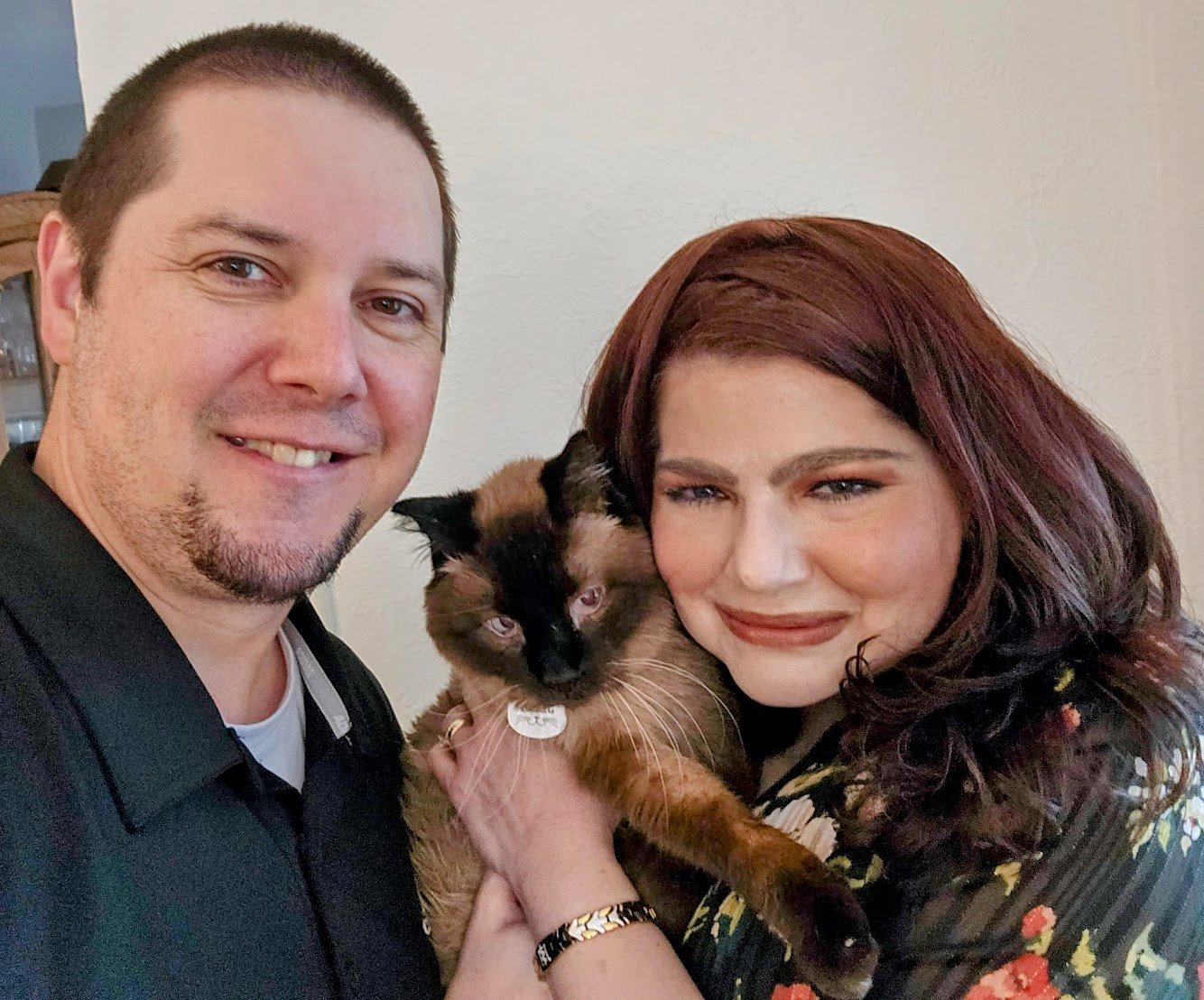
Mariah with her husband Troy and cat Isaac
My “Inner Circle” consists of the individuals who know everything about me, including the complexities of my medical conditions and the daily struggles that I face. They have been instrumental in helping me through the tough moments in life, and they are also the ones with whom I share my joys and victories, loving me no matter what challenges arise. They provide me with unconditional love, assistance, and encouragement, and I value, love, and respect them immensely. My “Inner Circle” consists of my husband, Troy, and my cat, Isaac, as well as both of my parents and my brother. It also includes a few key friends that are pretty special.
Having a hobby or a passion that you genuinely enjoy is also vital for achieving hope, optimism, and positivity. Throughout my school years, I took oboe, piano, and vocal lessons. Since I am incredibly unathletic, music became my thing and I truly loved and enjoyed making it. I still do. My main instrument is the oboe, which I still play today. I also play the piano and sing soprano in our church choir. Music has always been my primary form of self-expression, and it has also given me a sense of belonging, as well as an individual pursuit where I can grow and succeed. It became my version of a “team sport,” and most of my closest friendships have been rooted in our shared love of music. Playing the oboe offers a way to express my emotions, and I strive for my audience to truly feel the music I play. Even though I experience pain while playing, I choose to keep doing what I love.
My nonprofit work has filled me with deep gratitude and an even greater desire to give back to the childhood cancer community. The experiences I’ve gained through this work have profoundly enriched my life. Practicing gratitude and spreading kindness are so important, and I live these values through my involvement with more than ten cancer nonprofits in various capacities - including Children’s Cancer Cause. I pour my heart into advocacy, family support, survivorship, funding, awareness, and more. This work makes me feel truly useful and worthwhile, and it fulfills me and gives me a sense of purpose. I have had incredible experiences along the way, and I finally feel like I’m doing what I was meant to do with my life!
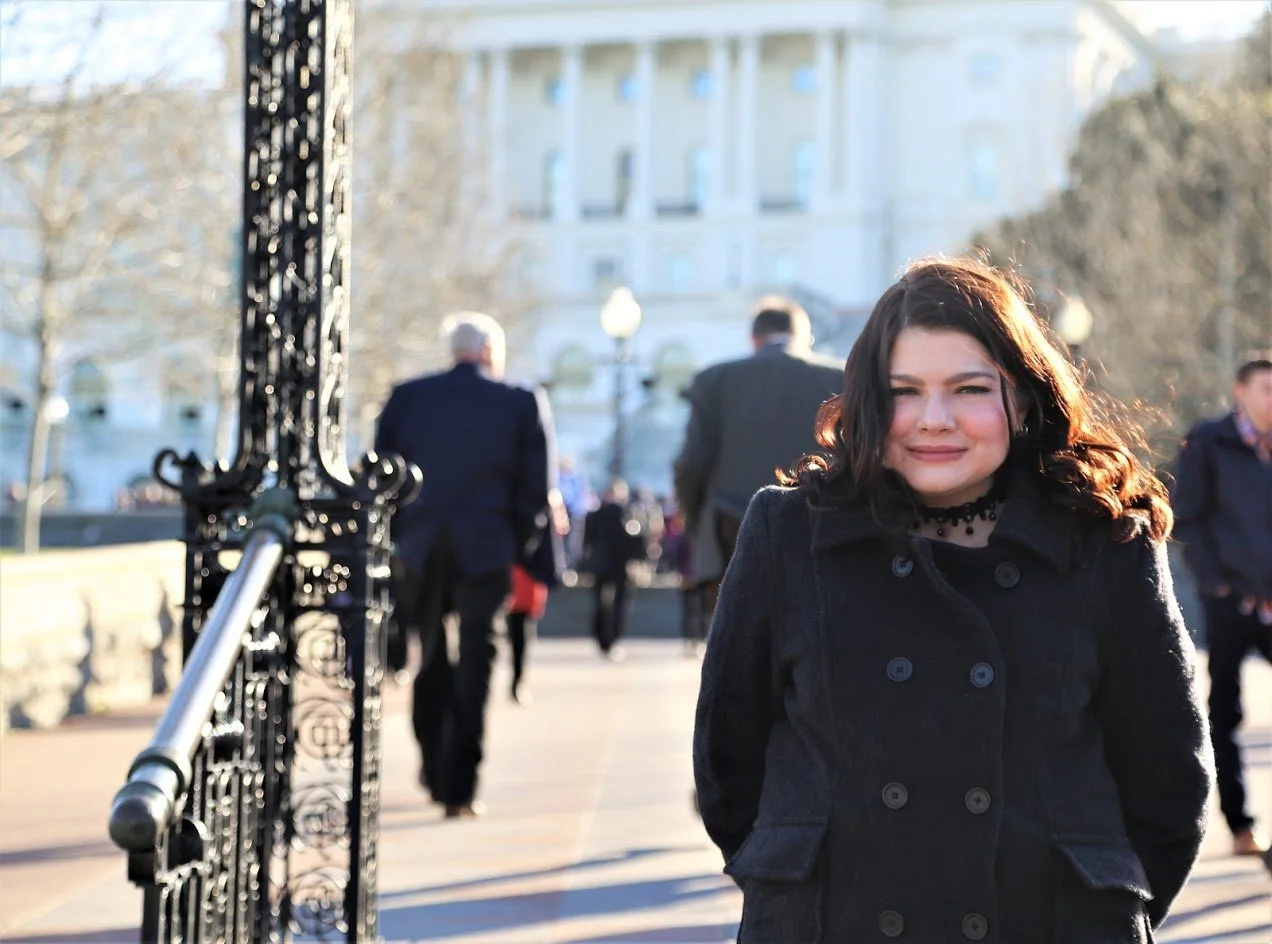
Mariah at Childhood Cancer Action Days in DC
I wrote this book for several deeply personal and professional reasons. When I was treated for neuroblastoma, my chances of survival were slim. As a result, I became an “experimental patient,” receiving a new, two-year chemotherapy protocol. My case outcomes were of great interest to researchers, and it was our understanding that I would be followed throughout my life as one of the first generations to survive neuroblastoma. Remarkably, three of the four chemotherapy drugs used in my treatment are still standard front-line medications today — while the fourth was eventually deemed too dangerous for children. Yet, Mayo Clinic does not have a dedicated childhood cancer survivorship clinic, and most medical staff understandably focus on treating current patients, leaving limited resources for long-term survivor care.
Since I am not part of a formal, lifelong study, this book became my way to document and share my survivorship journey and late effects in a way that can benefit others. In addition, many of my medical records were originally on paper: massive stacks of folders that doctors would carry into the exam room, often so tall that they couldn’t see over them. Sadly, much of that information was never digitized, and a great deal of history was lost. Although I’ve kept some personal notes, my medical records are incomplete. Writing this book allowed me to gather and preserve what remained — creating one cohesive record of my medical and personal journey.
I also wrote this book for the childhood cancer community, especially for survivors who, like me, have felt isolated and unseen. Growing up, I had no internet, online support groups, or ways to connect with others who shared similar experiences.
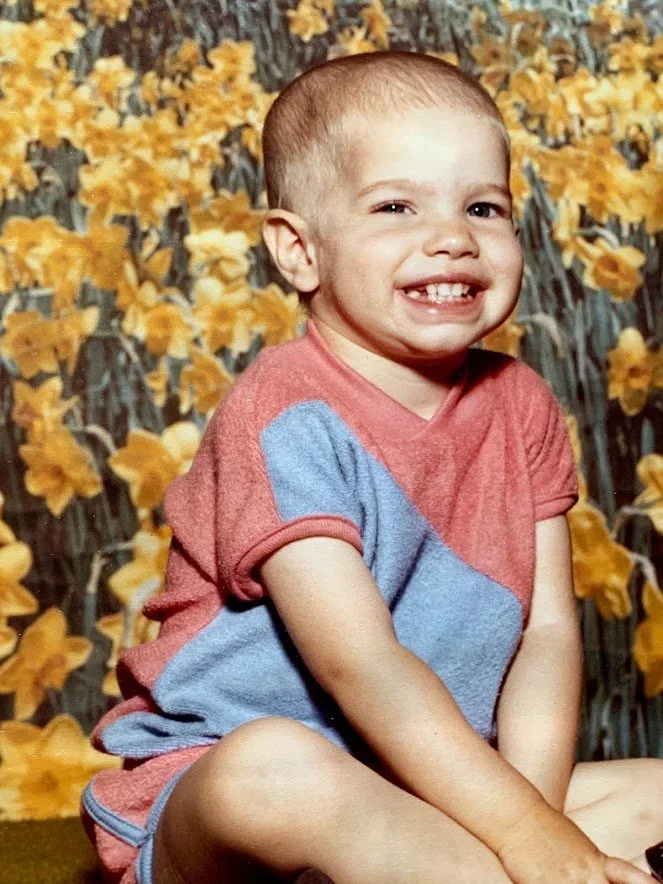
Mariah during treatment, age 2
One of the first times I felt truly understood was while reading a book by Erma Bombeck that mentioned a child named Ryan, who also had neuroblastoma, and even experienced some of the same unusual side effects, like sweating on only one side of the body! For the first time, I saw myself reflected in someone else’s story, and that meant everything to me. That moment inspired me to open up and share my own story — honestly and vulnerably — so that other survivors might feel less alone and more understood.
I hope this book raises awareness about the lifelong impact of childhood cancer survivorship. It’s a common misconception that life simply “returns to normal” after treatment ends. For many survivors, the physical, emotional, and psychological effects of childhood cancer can last for a lifetime.
Working with childhood cancer nonprofits and navigating the waters of survivorship really made me reflect and realize that I needed to tell my story and shed light on this reality.
Ultimately, this book aims to raise awareness that cancer’s impact doesn’t end when treatment does. By sharing my challenges and lessons, I want to inspire hope and resilience — not just in the childhood cancer community but for anyone facing life’s hardships.
Guided by faith, knowledge, humor, my inner circle, my love of music, and giving back, I am reminded daily of the power of optimism and positivity — and to always have hope over despair.
Mariah serves on our Survivorship Advisory Council, a group that meets regularly to help guide and contribute to the survivorship activities and programs of Children’s Cancer Cause, including our Stewart Initiative for Childhood Cancer Survivors. We are so grateful to Mariah for sharing her survivorship experiences and insights.
You can contact Mariah through her website.