
What Strong Survivorship Programs Have in Common
What happens after cancer treatment ends can be just as impactful as the treatment itself.
At a recent virtual event hosted by Children’s Cancer Cause, survivors and leading experts came together to share what it takes to build strong, sustainable follow-up care programs that help childhood cancer survivors thrive. The speakers who gave their time and expertise to this discussion are all members of our Survivorship Champion’s Prize working group, comprised of providers from institutions that we have recognized for their excellence in caring for childhood and adolescent cancer survivors.
This conversation is part of Children’s Cancer Cause’s broader effort to strengthen survivorship care nationwide through initiatives like the Survivorship Program Resource Center and the Stewart Initiative for Childhood Cancer Survivors educational courses.
By elevating the initiatives of successful survivorship programs and sharing best practices, Children's Cancer Cause is helping expand access to high-quality survivorship care across the country.
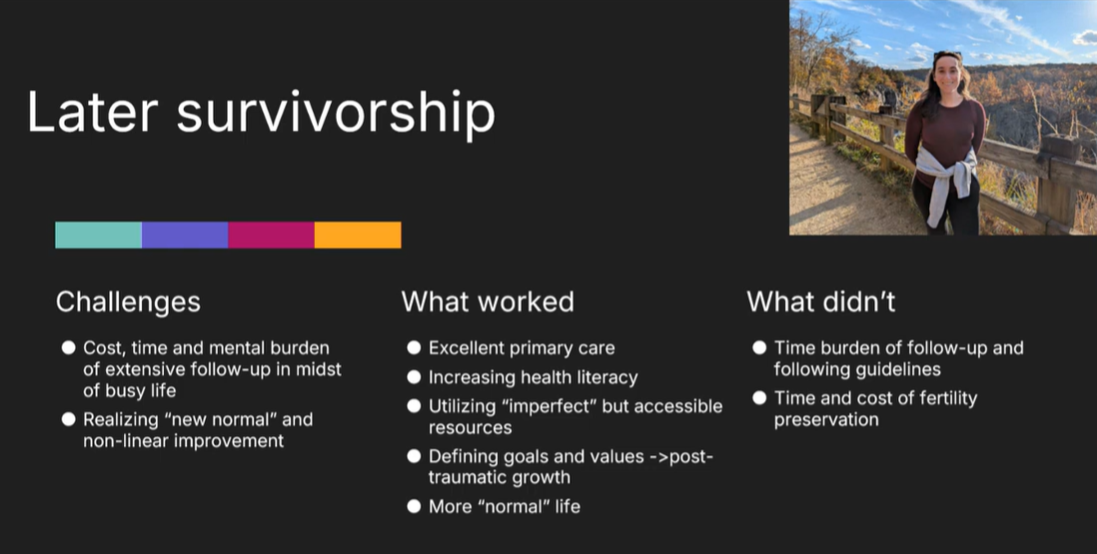
Slide from Meaghan Kilner’s survivor perspective presentation
A Survivor’s Perspective: “Recovery Isn’t Linear”
Diagnosed with Hodgkin lymphoma at 15 and now a medical student, Meaghan Kilner opened the conversation by describing the complexities of survivorship as a young adult and the cost, time, and mental burdens that really add up. She gives the example of attending medical appointments for fertility preservation during every school break.
“When you’re diagnosed with cancer, everything is put on hold for a little bit. But now I’m a medical student, and I still need to do everything else that my peers need to do — and have follow-up care on top of that.”
She emphasized that recovery doesn’t follow a straight path, and she encourages other survivors to adjust expectations. Many survivors expect to feel ‘normal’ within a certain time frame, but healing often takes longer and looks different than anticipated.
Meaghan’s story reinforced a central theme: quality of life must be at the heart of survivorship care.
What Strong Survivorship Programs Have in Common
Across institutions — from large cancer centers to small, under-resourced community programs — experts highlighted several core elements of successful survivorship care.
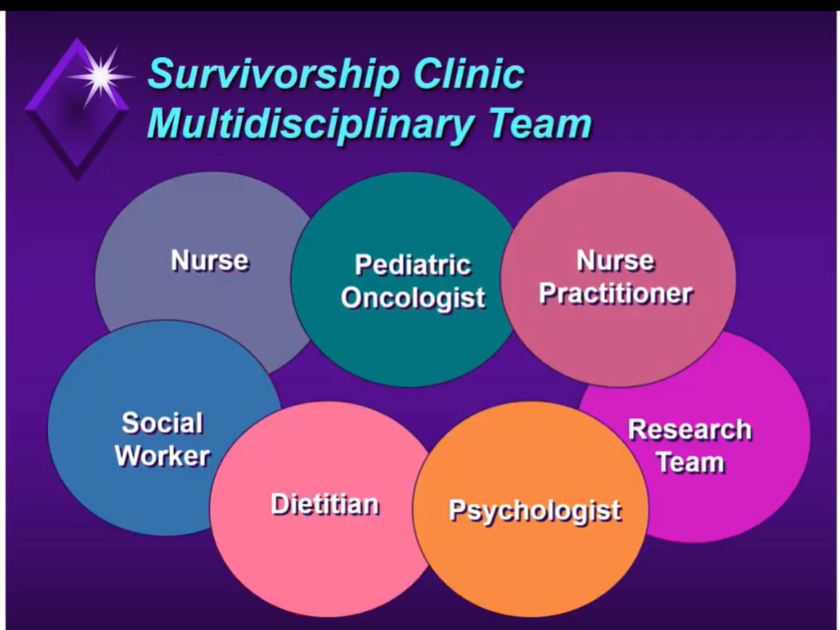
Slide from Dawn Carey of the LITE Program at Rutgers Cancer Institute
Multidisciplinary, Whole-Person Care
Survivorship programs aim to bring together teams that may include:
Oncology and primary care providers
Mental health professionals
Nutrition and rehabilitation specialists
Social workers and patient navigators
Interpreter services and bilingual team members
This approach ensures care addresses not only medical needs but also emotional, social, and practical challenges.
Personalized Care Plans and Education
Survivors receive detailed treatment summaries and follow-up plans tailored to their history, often supported by tools like Passport for Care. Programs are increasingly making this information digitally accessible and easy to share with other providers.
Integration with Primary Care
Reducing fragmented care is a major priority of providers who care for survivors. Many programs are working to partner closely with primary care providers, ensure smooth and secure data collection and sharing, and reduce the burden on survivors wherever possible.
Dawn M. Carey RN, MSN, APN, at the LITE Program for Pediatric Cancer Survivors at Rutgers Cancer Institute of New Jersey shared an evolving success story about creating a transition program that brings a primary care physician into the fold at the clinic. He attends meetings with survivorship providers to help develop joint treatment plans for some survivors “to help bridge some of the gaps.”
Supporting Adolescents and Young Adults (AYA)
The transition from pediatric to adult care is one of the most vulnerable points in survivorship. In this virtual conversation, we heard some of the ways that programs are addressing this, such as:
Joint pediatric–adult transition clinics
Fertility, career, and educational support
Peer navigation and support programs
“We know there’s a high risk of being lost to follow-up once you ‘age out’ of the system, especially if you age out of a children’s hospital,” said Pinki Prasad, MD, MPH, Director of the Treatment After Cancer and Late Effects (TACLE) Clinic at Manning Family Children’s. “We also understand that as patients get older, there’s complex insurance and social challenges, and we want to make sure that we’re addressing those navigation issues.”
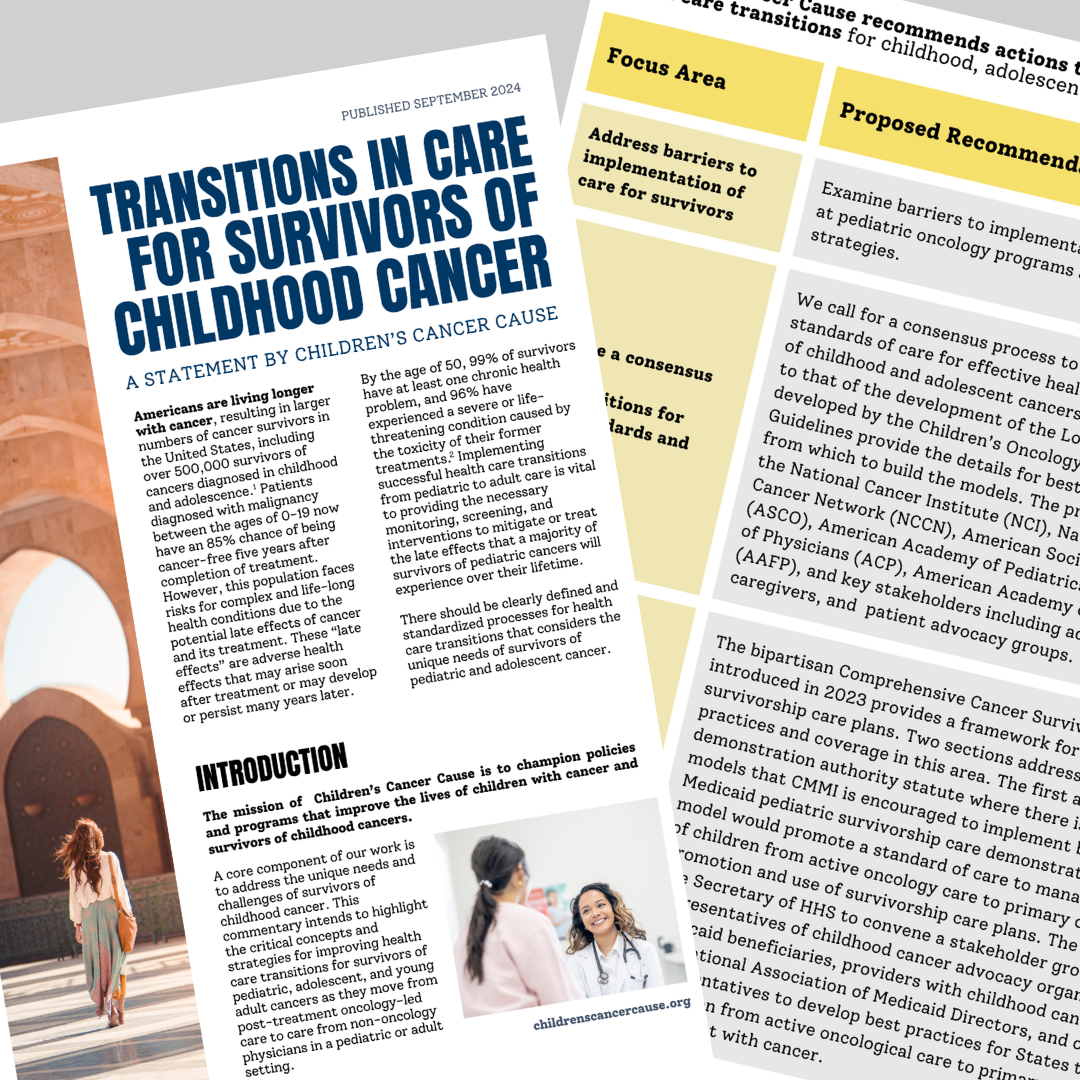
This is an issue that Children’s Cancer Cause is focused on from a policy and programmatic lens. Our Transitions in Care for Survivors of Childhood Cancer statement calls for a more coordinated, structured approach to helping survivors move into adult healthcare systems. With a growing population of survivors facing lifelong health risks, successful transitions are essential to long-term health and continuity of care.
Leveraging Technology and Innovation
Many programs are using digital tools to improve access and efficiency, including telehealth visits, patient portals, automated reminders for follow-up care, and data systems that track outcomes and improve workflows.
These innovations help make survivorship care more accessible, especially for busy young adults balancing school, work, and life. Experts and survivors also recommend trusted online resources – such as our Stewart Initiative educational modules.
“Something that's helped is my own personal increasing health literacy. I think that can give people a lot of power to understand why it’s important to continue with follow-up even when it feels like a burden,” said Meaghan.
Challenges That Still Need Solutions
Some ongoing challenges identified in this conversation - and the above-mentioned Transitions statement - include:
Time and Financial Burden: Frequent appointments, testing, and treatments for things like fertility preservation can be costly and time-consuming.
Care Coordination Gaps: Many survivors report that communication between providers isn’t always consistent, leading to gaps in care.
Barriers in Transitioning Care: The timing of transitioning patients into survivorship care can be inconsistent and challenging, with survivors and providers both having difficulty “letting go” of their established patient care relationship.
Limited Resources: Many survivorship programs operate with small teams and limited funding, requiring creativity and persistence to grow. Grant funding is difficult to find, competitive to secure, and “finicky.”
Starting Small — and Growing Strong
For organizations looking to build or expand survivorship programs, the message is encouraging: you don’t have to start big.
Experts emphasized:
Starting with just one or two committed individuals
Leveraging existing resources and partnerships
Building support gradually within institutions
Demonstrating value over time
“If you get support from even one person… you’re able to get more members to your team,” said Dawn Carey. “There’s no one set way to do this. You can utilize what resources you have available to you at that time and build it that way.”
Programs recognized with the Survivorship Champion’s Prize began in many different ways, but they all share a commitment to meeting survivors’ long-term needs and continuously improving care.
The Power of Community and Shared Learning
This event - which you can watch in full below - reflects Children’s Cancer Cause’s broader role as a connector and catalyst in the survivorship field.
Through its growing network of programs, Children's Cancer Cause is helping providers learn from one another, share practical strategies, and adapt successful models to their own communities. The programs featured in this virtual meeting and in our Survivorship Program Resource Center demonstrate that high-quality survivorship care is possible in a wide range of settings.
Survivorship care is an essential part of the cancer care continuum. As programs continue to grow and evolve, the goal remains clear: helping survivors live long, healthy, and fulfilling lives long after treatment has ended.